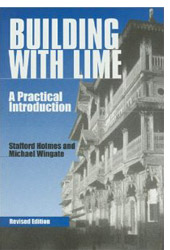
A starting point and general reference book to the broad range of uses for lime in construction.
1997, revised 2002, 309 pages, many photos and drawings.
Publications on Lime
Books are categorised into several sections. Click on the appropriate link below to view the relevant section, or scroll down the page to browse the full list. Each title has a link, either to Amazon or, where the book is not available through Amazon, to the relevant publisher or distributor. The links on this page are provided for your convenience without any endorsement or liability.
Technical Reference
-
-
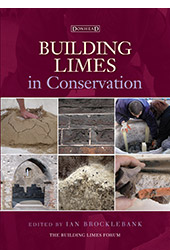
A guide to the many uses of lime in building, aimed at building owners, practitioners and specifiers. Highly illustrated and cross-referenced, previous technical knowledge is not necessary.
2009, Commissioned by BLF Ireland. Normal price: €30, price to BLF and BLFI Members: €25. -
How Hydraulic Lime Binders Work
Hydraulicity for beginners and the hydraulic lime family. Scientific yet readable account of the differences and similarities of hydraulic lime and cement.
Available from the Scottish Lime Centre Trust, Rocks Road, Charlestown, Fife, KY11 3EN +44 (0) 1383 872 722 info@scotlime.org
-
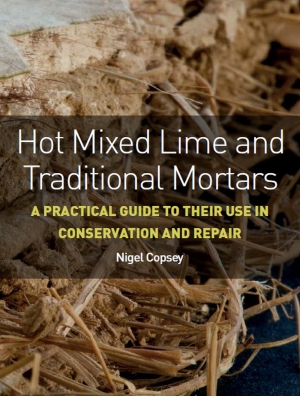
A simple and straightforward guide to using lime plasters, mortars etc to repair traditional buildings, based on over 25 years practical experience.
1998, A5, 32 pages -
Une traduction en français du livre de Jane Schofield, un guide simple et facile à utiliser de la chaux.
-
Origine, produzione, impiego del grassello di calce in architettura, nell’arte e nel restauro.
2007, 224 pages, in Italian
Lime for Conservation
-
An authoritative guide on how to look after your old house using the conservation approach of the Society for the Protection of Ancient Buildings. Repair or maintenance from the foundations to the roof.
2008, 208 pages, many colour illustrations, hardback. -
Written for the general reader and without detailed technical explanations, the benefits of ‘breathability’ achieved through lime magic: the technical benefits, the emotional and economic benefits, preservative powers, green credentials, etc. With useful case studies.
2008, 110 pages, many colour illustrations. Available from Cliff Blundell, Dolaumaen, Mynachlogddu, Clynderwen, Pembrokeshire, SA66 7SB for £10 plus £2 P+P (cheques to be made out to Cliff Blundell).
Lime Mortars
-
Historic Scotland Technical Advice Note 1. A guide to the principles underlying the use of lime mortars in re-pointing and masonry consolidation, including advice on materials, specification and site practice.
2003, A4, 76 pages, illustrated -
Best Practice guide to using hydraulic lime mortar invaluable for all building practitioners, contractors and tradesmen specifying or handling hydraulic lime on site.
2003, 104 pages -
Technical annex for use with BS 5628-1:2005 on the structural use of unreinforced masonry made with natural hydraulic lime mortars. Free to download from the NHBC Foundation website as a pdf file (1.8 MB).
-
Provides a classification of lime and a state of the art review of its various uses in building construction and repair, of substantial interest and practical value since the methods, terminology and practices detailed by Cowper are still valid today.
1927 (facsimile 1998), 96 pages -
“Observations on Limes, Calcareous Cements, Mortars, Puzzolanas, Natural and Artificial, together with Rules deduced from Numerous Experiments for Making an Artificial Water Cement Equal in Efficiency to the best Natural Cements of England.”
1847 (facsimile 2010), 228 pages, hardback -
A fascinating insight into the developments using lime during the eighteenth and early nineteenth centuries. Michael Wingate’s excellent introduction to this edition offers a helpful present day perspective of the work undertaken on lime in that period, and shows how relevant such research is to conservation practitioners and others currently specifying or directly working with lime.
1838 (facsimile 1997) 160 pages, hardback -
The classification which Vicat prepared is still valid today and enables the best use to be made of lime, particularly for hydraulic works. Smith’s enthusiastic notes are as exciting as Vicat’s text on how to choose and use the right limes.
1837 (facsimile 1997) 22cm, 352 pages, hardback
Lime Plasters and Renders
-
Historic Scotland Technical Advice Note 15. A comprehensive account of the benefits of using lime finishes on the exteriors of traditionally constructed buildings. Illustrated
2001, A4, 92 pages -
Historic Scotland Technical Advice Note 2. An account of the types of plaster found in Scottish traditional buildings with advice on conservation, repair, restoration methods and specification.
2002, A4, 44 pages, illustrated -
Historic Scotland Technical Advice Note 26, to be read in conjunction with Conservation of Plasterwork (TAN 2). Covers a range of issues concerned with the care and repair of decorative plasterwork dating from the first three-quarters of the seventeenth century.
2004, A4, 68 pages, illustrated -
A key reference book on 16th to 19th century plasterers and their craft. First published in 1975, republished with new introduction by Richard Ireland
1975, republished 2011, 296 pages, 158 black and white photographs -
Step-by-step instructions with illustrations to show working with lime- and clay-based plasters, renders and paints from design, preparation, materials and execution.
2008, 264 pages, Lavishly illustrated. -
A textbook for craftsmen and specifiers.
1986, A4, 1 photo, 16 technical drawings -
Straightforward practical instruction on the tried and tested methods of plastering including the tools, running moulds and geometry for setting out.
1951 (facsimile 2007) 144 pages, hardback. -
An invaluable source of information, not only for plasterers but also for designers and specifiers who want to understand plastering methods and materials better.
c1930 (facsimile 2000) 456 pages, 342 figures, 16 plates, hardback. -
Millar’s 1987 text revised and four new chapters added (on lime-stucco, modern plasterwork, modelling in relief and exterior plastering and sgraffito).
1927 (facsimile 2009) 496 pages, hardback. -
A real attempt to understand the historical development of the craft and a good insight into the ideas and ideals that Arts and Crafts designers were seeking to follow. New introduction by Tim Ratcliffe and Jeff Orton.
1908, republished 2002 -
Still viewed as the plastering ‘bible’. A comprehensive coverage of traditional plasterwork, including everything from plain lime plastering through to hand modelling and cast plasterwork.
1897 (facsimile 2010) 768 pages, 231 plates, hardback -
Decorative Plasterwork in the Houses of Somerset 1500-1700. Sources, style, symbolism, the crastsmen, technique and conservation. Gazetteer and a glossary.
1994, 88 pages, 125 illustrations -
The Nearly Non Technical Book on Plasterwork
Leonard Grandison’s humorous overview
Available from L Grandison & Sons, Innerleithen Road, Peebles EH45 8BA. Telephone 01721 720212 for availability and price
Lime Burning and Production
-
A guide to the selection, design and operation of lime-burning plants for small-scale operations presented in the philosophy of small is beautiful.
1985, 144 pages -
A practical guide to design, construction and use.
1999, A4, 70 pages, several photos and figures
Masonry Construction
-
Covers the basic methods of working stone, the making of specialized tools, and, for the first time, a full analysis of the procedures for setting-out for repairs.
1995, 288 pages -
An essential reference for stone masons and conservation practitioners working with historic buildings.
1929 (facsimile 2006) 368 pages -
A practical look at all the regional varieties and how to build each type. The only number one bestseller on the BLF bookstall.
1997, 24cm, 175 pages, heavily illustrated, hardback -
Gerard Lynch
An in depth guide to all aspects of brickwork and bricklaying practice.
1994, 456 pages in two hardback vols. -
This practical handbook for superior brickwork combines simple diagrams and photographs to describe each stage of the process, from rubbing, cutting and shaping the bricks to laying and carving them.
2006, 25cm, 224 pages, many illustrations, hardback. -
The history and use of cut, rubbed and gauged brickwork, the use of tools and equipment and the differences between historic and contemporary bricks with a view to inform conservation and restoration decisions.
2007, 464 pages, many illustrations, hardback. -
A text book for craftsmen.
1989 (2nd ed.), A4, 66 pages, 70 figures -
Technique, science and philosophy for specifiers and conservers.
1999, 25cm, 294 pages, many illustrations, hardback.
Earth Construction
-
Very practical and inspiring. This is what you do.
1997 (2nd ed.) 24.5cm, 78 pages, fully illustrated. -
1989, 25cm, 362 pages, countless illustrations.
-
A step-by-step guide to the ancient method of cob building using a simple mixture of clay sub-soil, aggregate, straw and water to create solid structural walls built without shuttering or forms.
2006, 256 pages, fully illustrated. -
Historic Scotland Technical Advice Note 6. A wide ranging study of all aspects relating to earth structures, their recognition and conservation.
1996, A4, 128 pages, densely illustrated. -
Historic Scotland Technical Advice Note 30.
All aspects of turf construction in Scotland from the material itself, methods of building and tools used, maintenance and conservation, case studies.
2006, A4, 92 pages, illustrated.
Research and Conference Proceedings
-
Proceedings of the Scotland International Lime Conference, Edinburgh, 1995. The state (in 1995) of understanding of lime of interest to those using traditional lime mortars, renders, decorative and protective treatments in building and conservation work. Also available to BLF members as Lime News Vol 4.1.
-
Proceedings of the Traditional Building Materials Conference held in Stirling in September 1997. It covers a wide range of issues relating to the history, use, and repair of traditional building materials, including earth, clay, brick, slate and stone. .
1997, A4, 136 pages, illustrated. -
Includes papers from Ray Smith, John Fidler, John Bucknall, and Jim Allen.
1992, 23cm, 317 pages.
Directories
-
A map showing major building stone types and building stone quarries with images of buildings and the stone from which they are constructed. A useful classroom resource and a source of information for anyone seeking to learn more about the United Kingdom’s natural resources.0751833185
2001, 28.8 × 18.4 × 0.6 cm -
Historic Scotland Technical Advice Note 19. A guide to the availability and suitability of aggregates for use in mortars to match those used in historic buildings in Scotland.
1999, A4, 60 pages, 19 figures


